
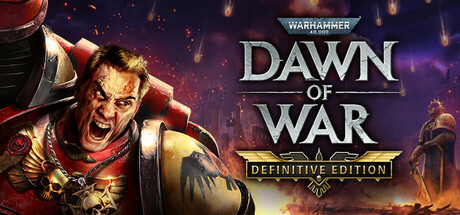

1 Where to start with four campaigns
Opening the collection and seeing four campaigns is the first real decision. Release order is the recommended answer for most players, and not for reasons of nostalgia.
| Order | Campaign | What it teaches |
|---|---|---|
| First | Dawn of War | One faction, scripted missions, the core rules taught in sequence |
| Second | Winter Assault | Controlling more than one faction and reacting to harder missions |
| Third | Dark Crusade | Free choice of faction and a strategic layer over the battles |
| Fourth | Soulstorm | The widest roster, with all nine factions available to play |
If you only want the strategy game and not the story, start at Dark Crusade instead. It hands you a faction of your choice and a map to conquer, which is the format most players stay with long term.
2 How the conquest campaigns work
Dark Crusade and Soulstorm replace a fixed mission list with a territory map. You pick a faction, you own a province, and each turn you attack an adjacent one. Other factions do the same, so the map changes whether or not you are looking at it.
Two habits make this layer much less painful.
- Expand along a front rather than into the middle. A province with fewer exposed borders is a province you will not be dragged back to defend.
- Take the provinces that grant bonuses early, while their defenders are still weak, rather than saving them for later.
The stronghold missions belonging to each faction are the set pieces of these campaigns, and they are noticeably harder than ordinary province battles. Approach one with an upgraded commander and a clear idea of the terrain rather than as the next item on a list.
3 Choosing a faction by temperament
Nine factions is a lot to evaluate. Rather than ranking them, it is more useful to match them to how you like to play, because their differences are structural rather than cosmetic.
| If you like | Try |
|---|---|
| A forgiving first run | Space Marines. Durable squads, straightforward buildings, the campaign teaches them |
| Numbers and momentum | Orks. Cheap bodies that win by arriving in quantity and closing distance |
| Massed infantry and artillery | Imperial Guard. Large squads and mechanised support, weak when caught in melee |
| Speed and precision | Eldar or Dark Eldar. Fragile but fast, punishing if you misjudge a fight |
| Ranged control | Tau. Firepower at distance with support elements, uncomfortable up close |
| Something that breaks the rules | Necrons. A distinctly different economy and pace to everything else in the game |
Chaos Space Marines sit close to the Space Marines in structure with a darker toolkit, and the Sisters of Battle lean on faith based abilities. Both are reasonable second choices once the basics are comfortable.
4 Your commander is a resource
In the conquest campaigns your hero carries progress between battles through equipment earned by winning them. That makes the commander the one piece on the board you genuinely cannot afford to lose casually.
5 Reading a defence you did not choose
Defending a province you already own is the part of the conquest campaigns that catches people out, because you fight on a map chosen by the attacker with whatever force you left there.
The response is the same as anywhere else in this game: get out and capture points. A defensive mission that you play entirely inside your own base starves, because the income you need is sitting on the map you refused to contest.
6 Moving into multiplayer
The store lists online PvP, online co-op and cross platform multiplayer, with matches for two to eight players. Skirmishes against the computer use the same rules, so they are the natural bridge.
One practical difference is worth preparing for. Human opponents contest strategic points constantly rather than defending a base, so a build that works against the computer can collapse against a player who simply takes the map while you tech up. Practise expanding under pressure before you queue.
7 Getting value out of mods
The Definitive Edition includes a mod manager and states compatibility with more than twenty years of community work, plus a level editor. That back catalogue is unusually deep, ranging from balance adjustments to total conversions with new factions.
The sensible approach is to finish at least one campaign unmodified first. Large mods change unit rosters and pacing, and it is difficult to judge whether you like the base game if you never played it. After that, treat mods as the reason this collection has a long life rather than as an optional extra.
Play the campaigns in release order for the story, or jump straight to Dark Crusade for the free form conquest format. On a territory map, expand along a front, take bonus provinces early and treat stronghold missions as set pieces. Pick a faction by how you like to fight rather than by power level, keep your commander attached to a squad instead of leading charges, and contest the map even when defending. Finish one campaign unmodified before opening the twenty year mod catalogue.
Comment
No comments yet. Be the first to post one.