

1 Your origin sets the tone, not the ceiling
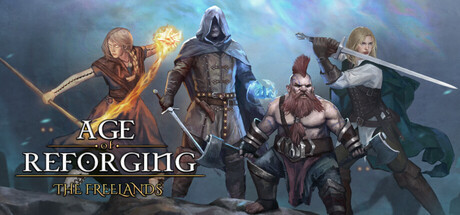
You begin by choosing an origin: born with magical talent, an infamous bandit, a down on their luck mercenary, and others. Each carries its own opportunities and its own problems.
What it does not do is lock your build. There are no class restrictions, and over 200 combat skills and 100 magic skills can be mixed however you like. A bandit can end up a spellcaster.
So pick the origin for the story you want to be in rather than for the character sheet. The mechanical consequences are recoverable. The narrative framing lasts the whole run.
2 Hunger and fatigue are the real early enemy
The practical habit is boring and effective: before leaving a town, buy more food than the journey appears to need. A party that arrives at a fight already tired loses a fight it would otherwise win, and the cost of over provisioning is a few coins.
With nine towns and thirty wilderness locations, distances are real. Plan routes that pass through somewhere you can resupply rather than straight lines across the map.
3 Use the pause, every fight
Combat runs in real time, but you control the flow of time and can stop to issue precise orders. Players arriving from action games often treat that as an emergency button and lose fights they had the tools to win.
Treat it instead as the normal way to play. Pause at the start of every engagement, before anything has gone wrong, and place your party deliberately. The difference between a squad that opens well and one that opens by accident is larger than any equipment upgrade you can buy at this stage.
4 Recruit before you explore
This is a squad game. Wandering alone into the wilderness with more than 200 kinds of monster in it is a short story.
Spend the opening hours in and around the towns, take the work that is offered, and build a party before committing to distance. A second and third body change what is survivable far more than a level does, because they let you hold a line while someone else acts.
5 Give yourself one goal at a time
Between 150 side quests, arenas, caravans and castles, the game will happily let you start everything and finish nothing. Freedom is the selling point and also the failure mode.
The Freelands are described as a place where most arrivals end up in a grave and only a few get what they came for. Playing narrowly at first is how you become one of the few.
Choose an origin for the story rather than the stats, since there are no class restrictions and skills mix freely. Buy more food than a journey seems to need, because hunger and fatigue end more early runs than monsters do. Pause at the start of every fight rather than only when it goes wrong, build a party before travelling far, and hold yourself to one goal at a time until supplies and squad are stable.
Comment
No comments yet. Be the first to post one.