
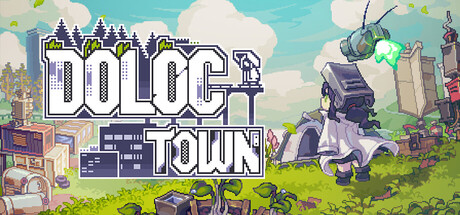

1 Vertical farming changes the plan
In a conventional farming sim, expansion means clearing more ground. Here you stack platforms and grow the farm upward, climbing and jumping between levels.
The consequence people miss is that height costs travel time on every visit. A crop on the fifth platform is watered, tended and harvested from further away than one on the first, forever.
So put the things you touch most often low, and the things you touch rarely high. Daily crops near the ground, storage and slow processes above. That single decision compounds across the whole game.
2 Treat weather as a schedule
Acid rain erodes crops, heat bakes the earth, and thunderstorms roll in repeatedly. But rain irrigates and lightning can power the farm, which means the weather is not simply bad.
Early on you will not have much to capture weather with. The habit worth forming now is noticing which conditions repeat, so that when the equipment exists you already know when it will run.
3 Scavenging is a real income
More than 40 kinds of mineral, plant and scrap resource are shaped by the apocalypse, and the developers put it plainly: out here, even junk has a purpose.
You begin as a scavenger, and that is not only flavour. Before the farm produces anything, gathering is your entire economy, and the regions differ: the outskirts, the River Valley, the Wetlands, caves and the Old City Ruins each hold their own resources, foes and stories.
Fishing is worth adding early for the same reason. Different ponds, rods and weather conditions yield different catches, so it is a second gathering system rather than a diversion.
4 Do not skip the town
Befriending the townsfolk and celebrating seasonal festivals are listed alongside the production systems rather than beneath them. In this genre that usually means relationships gate content.
Players who optimise purely for output tend to arrive at the mid game with an efficient farm and no access to whatever the town unlocks. Spending a little time on people each week is cheaper than catching up later, because festivals happen on a calendar and will not wait.
5 A first week in order
There is no timer pressure to hurry any of this, since play without timed input is a listed feature. Taking a slow first week costs nothing and prevents a badly laid out farm you live with for 30 hours.
Because the farm grows upward, height is a permanent travel cost: keep daily crops low and slow processes high. Read each weather condition for what it is good for rather than whether it is good, since rain irrigates and lightning can power the farm. Scavenging is your entire economy before the farm produces, and each region holds different resources. Meet the townsfolk early, because festivals run on a calendar that will not wait.
Comment
No comments yet. Be the first to post one.