

1 Pick an archetype deliberately
You shape your adventure with archetypes, each offering distinct abilities to match a playstyle. The store frames the choice as relying on precision, on cunning, or on sheer strength.
Those three describe different relationships to danger rather than different damage numbers. Precision suits players who want to win fights outright, cunning suits players who would rather not be seen, and strength suits players who intend to stand still and hold ground.
2 Get a buggy early
The heading the developer uses for buggies is a joke about walking being bogus, and it is also the single most practical piece of advice in the whole store page.
This world is explicitly much larger than the backyard of the first game. A mount is not a convenience in a map that size, it is the difference between exploring and commuting.
Buggies also fight alongside you and help gather resources, so raising one improves three separate parts of your game at once. The store says the right partner can be the difference between thriving and barely surviving.
3 Scale changes what a park is
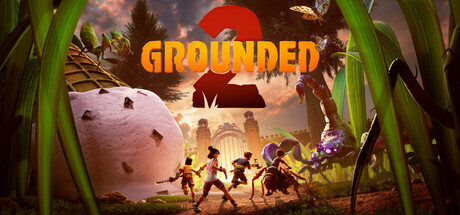
At ant size, familiar things stop being familiar. The setting is described as sprawling manmade spaces overgrown with nature, and as a playground whose bright colours and towering structures hide mysteries in plain sight.
The habit worth building early is looking at ordinary objects as terrain. A piece of play equipment is a structure with levels, a drain is a tunnel network, a puddle is a body of water, and each of them is somewhere you can go.
Verticality matters for the same reason. Things that would be a single step at human scale are climbs, and the routes above your head are frequently safer than the ones on the ground.
4 Build a shelter before a fortress
Base building runs from simple shelters to sprawling fortresses, and the ambition of the later options is a trap when you have just arrived.
A small safe place near your current activity is worth far more than a grand one built where you happened to start. Since the park is large and you will be ranging further as you unlock better transport, expect to build more than one.
One option is worth planning for rather than stumbling into: you can create fully underwater bases to support long expeditions. That turns water from an obstacle into somewhere you can operate from, and it is the kind of thing to build once you know where you keep needing to go.
5 Every fight is progression
The park holds apex predators as well as ordinary bugs, and the developer names AXL the tarantula and the Lizard as creatures that demand preparation, strategy and courage.
The reward structure is explicit: every encounter makes you stronger, through rare materials, powerful gear and unlocked upgrades. That means a dangerous creature is a resource you are not yet able to collect rather than a wall.
| Threat | What the game says about it |
|---|---|
| AXL, the tarantula | An apex predator demanding preparation |
| The Lizard | The other named apex predator |
| The snake | Learn its patterns, ride it, harvest its scales |
| The bird | Mentioned as a threat you should not forget |
The snake is the most interesting entry, because the stated solution is not to kill it but to learn it, ride it and take its scales. Expect at least some late threats to be puzzles rather than damage races.
6 Playing solo or together
Both are supported and the difference is real. Alone, the park is described as daunting. With friends, every challenge becomes an adventure, and a shared world means progress continues between sessions.
For a first playthrough with a group, decide early who is building and who is exploring. Base construction and expedition are both large time sinks, and a group that does everything together moves at the pace of its slowest activity.
Choose an archetype for how it helps while nothing is attacking you, since gathering and travelling are most of the game. Raise a buggy early, because a park this large punishes walking and buggies also fight and gather. Read ordinary objects as terrain and look upward for safer routes. Build a small shelter near where you are working rather than a fortress where you started, and treat apex predators as resources you cannot collect yet rather than as walls.
Comment
No comments yet. Be the first to post one.