

1 Read the animation, not the health bar
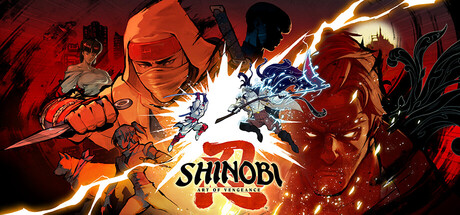
The visual style is not only decoration. In a hand drawn action game the animation is the interface: movement and attack animations are useful visual information, and the frames before an attack are the information you are supposed to act on.
Watch the attack sequence before changing your equipment. Record where the attack lands and where you can move safely.
2 The four parts of the arsenal
SEGA names four tools, and they are not interchangeable. Each answers a different problem, and the game expects you to switch between them inside a single fight.
| Tool | What it is for |
|---|---|
| Katana Oborozuki | Your main weapon and the backbone of every combo |
| Kunai | Reach. Hitting something before it reaches you, or across a gap |
| Ninjutsu arts | Powerful techniques activated when the Rage Gauge is full |
| Ninpo | Elemental and weapon techniques with different uses; read the selected ability |
Practice the available tools in an encounter you understand before adding them to a difficult boss attempt. This guide does not claim that a particular boss requires one unverified weapon choice.
3 Combos are about keeping the fight going
The store promises limitless combos built from unique combat moves. In practice that means the game rewards not letting a fight reset: keeping an enemy in a state where you can continue rather than starting over.
Aim for continuity rather than length. A short chain that ends with you safely positioned is worth more than a long one that leaves you standing in the middle of three enemies with nothing left.
4 Amulets are your build
Amulets are acquired for enhanced abilities, and they are the closest thing this game has to character customisation. The Deluxe Starter Pack includes the Medic Lite Amulet. Read the actual effect of each owned Amulet before using it; its name alone is not a complete description of its rules.
Choose them against your own weaknesses. A player who dies to chip damage while learning should take survivability, and swap to offence once the stages stop being the problem. Compare one equipment change at a time so you can tell whether it helped.
5 Ningi tools open the map
Ningi tools are described as overcoming obstacles and uncovering new paths. That is a structural statement rather than a combat one, and it changes how you should treat a stage you have already finished.
6 Stages hide more than they show
More than a dozen stages are promised, spanning military bases through a scorching desert, each with platforming puzzles and hidden secrets.
When a route is blocked, record the location and compare it with the Ningi tools you have unlocked. This is a useful exploration checklist; it does not mean that every unusual wall or ledge conceals a reward.
7 Platforming is a second skill
The store lists challenging platforming puzzles alongside the combat, which means two different kinds of failure. Dying to a jump is not the same problem as dying to an enemy, and the fixes are different.
For platforming, slow down and take one obstacle at a time rather than carrying combat momentum into it. Identify the landing area before combining movement inputs, and change one part of the attempt at a time.
8 How to spend your first hours
- Choose a difficulty where you can practice. Hardcore is selected only when starting a new game.
- Use a controller if you have one. A gamepad is recommended by the developer and this genre rewards it.
- Practice kunai and available Ninpo, then review the Rage Gauge requirement for Ninjutsu.
- Pick an Amulet that fixes how you are actually dying, not the one with the biggest number.
- Note every obstacle you could not pass, and come back once you have a new Ningi tool.
- Explore upward and backward. Secrets are rarely on the main path.
Tune visibility and reopen tutorials
The free update adds controls for hit stop, hit flash, camera shake and character outlines. If effects make it hard to follow Joe during a crowd fight, compare the outline and effects settings in a familiar encounter before changing your equipment. These options address readability; they do not provide an automatic dodge or change an attack into a different ability.
A new menu option lets you review tutorial information already encountered in the game. When a tool input is unclear, reopen its displayed tutorial instead of applying a guessed button sequence from another control layout. The announcement does not say every undiscovered tutorial is unlocked at the start.
Ninpo and Ninjutsu are different categories: SEGA describes Ninpo as techniques such as Fire and Water, while Ninjutsu becomes available when the Rage Gauge is full. Karyu is the illustrated Ninjutsu example. Check that gauge before expecting the large special technique to be ready.
The in-stage map view is larger, and a bug showing Musashi in the wrong map position is fixed. Update before treating a mismatched marker as evidence of a secret route. Sources: patch 1.2 details, released free-update features and Ninpo and Ninjutsu breakdown. Checked 27 October 2026.
React to the wind up rather than the hit, because the hand drawn animation is the tell. Use all four parts of the arsenal early so the katana is not your only answer at a boss. Build combos for continuity rather than length, choose Amulets against how you are actually dying, and treat Ningi tools as map keys by noting where you were blocked instead of grinding. Stages hide secrets off the obvious route, and platforming needs slower hands than combat.
Comment
No comments yet. Be the first to post one.