
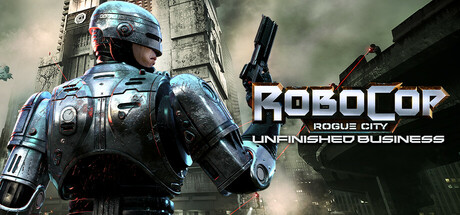

1 Threat priority beats aim
In a game where you can absorb a lot of ordinary fire, accuracy matters less than the order in which you remove things.
The right order is almost always automated first, elite second, ordinary last. Turrets and drones do not stop shooting, do not get scared, and do not need to reload, which makes them worse than the troops standing next to them.
2 Doorways are the decision point
The OmniTower is a building, which means the game is a sequence of rooms rather than a landscape. Every hard fight starts at a threshold, and that threshold is the only free look you get.
Stop there. Count the turrets, note where the drones are, and decide which side of the room you are advancing along. Ten seconds spent in the doorway is worth more than any weapon in the game.
3 Playing ED-209 well
The store promises that you step into the big boots of ED-209 and that this time criminals will not get twenty seconds to comply. Those sections are a power fantasy with a different centre of gravity.
Expect to be slower, larger and much harder to hurt. The mistake is playing them cautiously, which wastes the section and drags out the encounter. If you are piloting a walking weapons platform, the intended answer to a corridor of mercenaries is to walk down it.
4 Weapons you pick up are consumables
| Weapon type | How to treat it |
|---|---|
| Auto-9 | Your baseline. Everything else is measured against it |
| Cryo Cannon | Control. Spend it on what you cannot simply advance into |
| Scavenged heavy weapons | Use them on the problem in front of you, not on a problem you are imagining later |
Hoarding a rocket launcher through three rooms so it is ready for a boss usually means walking into those three rooms with a weapon you were not willing to fire.
5 The story is the reason to slow down
Teyon promises unique missions with familiar faces that reveal more of the storyline, and Peter Weller returning as the voice of Murphy is the headline piece of casting.
In a game this short, sprinting past conversations removes a large part of what you paid for. The action is good, but the reason this exists rather than being a generic shooter is the character, and that lives in the parts where nobody is shooting.
6 Difficulty and what it should feel like
Adjustable difficulty, playable at your own pace and playable without timed input are all listed. That gives you room to tune the experience rather than endure it.
7 The 25 achievements
Twenty five is a small list for an action game, which usually means most of it is story progression with a handful of entries for using specific tools or finishing in particular ways.
The practical approach is to play once naturally and read the list afterwards. A short game with a short list rarely needs a dedicated second pass, and steering your first playthrough around achievements costs you the pacing the developers built.
8 Habits that get you killed
| Habit | Why it hurts |
|---|---|
| Playing it as a cover shooter | You surrender your armour advantage and let turrets keep firing |
| Ignoring the ceiling | Drones and jet pack troops are the damage you cannot account for |
| Finishing a lone enemy | You spent an animation you needed for the next crowd |
| Rushing through doorways | The one free look at a trapped floor is the one you skipped |
| Playing Murphy like RoboCop | The store calls him vulnerable, and it means it |
Remove automated threats first, elites second and ordinary troops last, and use the doorway as your one free look at each room. Play the ED-209 sections aggressively, since caution wastes them. Fire scavenged weapons on the problem in front of you rather than saving them, and set the difficulty so RoboCop still feels unstoppable. Slow down for the story, because the returning voice work is a large part of why this exists.
Comment
No comments yet. Be the first to post one.