

1 The loop in one paragraph
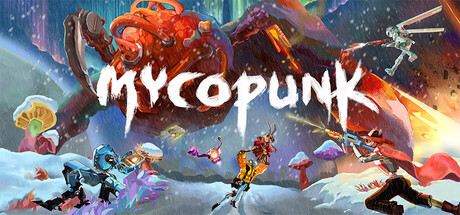
You take a dangerous planet side mission, slaughter hordes of fungal enemies, collect the mods they and the mission drop, then return to the orbital dropship and fit those mods into your grids. Piece by piece, the developer says, your scrappy robots and weapons mutate into finely tuned death machines.
The interesting decisions happen on the dropship, not during the shooting. Missions generate the parts; the hub is where you decide what you are becoming.
2 Enemies pick up what you drop
This is the single most unusual rule the store names, and it is easy to miss: you pick crawlies apart piece by piece, but whatever they drop could be grabbed up by another enemy.
In other words, dismantling something creates loose parts that the rest of the horde can use. That turns a familiar shooter action into a decision: killing something in the middle of a crowd may be arming the crowd.
3 The planet fights you with its own technology
Enemies are described as corrupting and weaponising the planet technology against you. That is a scenario design statement: the hazards are not separate from the enemies, they are what the enemies are doing to the level.
Practically, expect the environment to become more dangerous as a mission goes on rather than staying constant. Positions that were safe early are worth re-checking, and finishing a mission quickly has value beyond impatience.
4 Reading the upgrade grid
Mods occupy space on a grid, and whatever upgrades you can fit in are fair game. Two consequences follow, and both are unusual for a shooter.
- A weaker mod that fits neatly can beat a stronger one that wastes half the grid. Space is the real currency.
- The order you place things in matters, because a badly positioned early mod can make later ones impossible to fit.
Treat fitting as a puzzle you redo rather than a decision you make once. Since every mission grants new mods, the grid you built last week is rarely the best arrangement of what you now own.
5 Build for a job, not for a number
The developer lists three very different directions as equally valid: spec into being a healing support, put a deflector shield on a chainsaw, or turn yourself into a bomb.
| Direction | What it needs from the grid |
|---|---|
| Support | Consistency over peaks. Effects that work every fight rather than occasionally |
| Frontline | Survivability first, because being alive is what lets a melee build exist |
| Explosive specialist | Everything stacked on one effect, accepting that you are bad at everything else |
Any of these works. What does not work is a grid full of unrelated good mods, because in a system built on stacking, half measures multiply to nothing.
6 Crew roles in a squad
Since a healing support is explicitly one of the possible builds, a crew that has one is meaningfully different from a crew of four damage dealers. Nothing enforces a composition, which means the group has to choose one.
Agree before deploying, not during. The simplest working split is one person who keeps everyone standing, one who handles crowds, and the rest free to specialise. In a game where enemies rearm themselves from what you break, crowd control is worth more than it looks.
7 Use the dropship
The orbital dropship is packed with toys and games, and it is where you uncover more about the galaxy and talk to Roachard Cox, the insectoid SAXON veteran.
In a game with this much comic writing, skipping the hub to queue the next mission removes the part that gives the shooting a context. It is also where your group naturally decides what to do next, which is worth more than a few extra minutes of deployment time.
8 Your first few missions
- Play the first missions without rebuilding anything. Learn what the enemies do before deciding what you want to be.
- Watch what happens when you dismantle something near a group. That rule shapes everything else.
- Once you have a handful of mods, pick one direction and fit for it rather than taking the strongest of each.
- Re-examine the grid every few missions, since new mods can make a better arrangement possible.
- If playing with others, agree who is keeping the crew alive before you deploy.
- Remember it is Early Access. Systems can change, so enjoy the current build rather than optimising it forever.
Missions generate mods and the dropship is where you decide what to become. Remember that pieces you knock off enemies can be picked up by other enemies, so finish what you break or kill away from the group. Treat the grid as a spatial puzzle where a smaller mod that fits can beat a bigger one, and commit to one direction rather than collecting unrelated upgrades. Agree crew roles before deploying, use the hub, and accept that Early Access means today is what you bought.
Comment
No comments yet. Be the first to post one.