
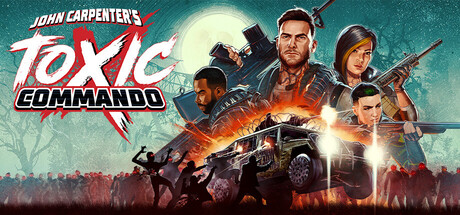

1 Never fight a horde head on
The Swarm Engine exists to put thousands of enemies on screen at once, and the store says the horde never stops. Against that, killing things faster is not a strategy, because the supply is effectively unlimited.
What works is geometry. Doorways, corridors, ramps and vehicles all reduce the number of enemies that can reach you at once, and that number is the only thing that decides whether you survive.
The moment a squad ends up in open ground with infected arriving from every angle, the fight is already lost. Move before that happens rather than after.
2 Ammunition is the shared resource
Sharing ammunition is named as one of the four things a squad does, alongside reviving, covering each other and laughing through the madness. It is listed as a mechanic rather than as a courtesy.
Treat the squad total as your ammunition rather than what is in your own pockets. One person shooting constantly while three save theirs is the worst possible distribution, and one person running dry in the middle of a wave costs the whole team.
3 Reviving is the whole difference
In a horde game, a downed teammate is not a minor setback. It removes a quarter of the firepower holding a line and adds a rescue objective in the worst possible place.
4 Grenades and powers are for the swarm
The arsenal is described as guns, grenades and devastating powers. In a game where ordinary enemies arrive in thousands, the last two categories are not finishers for tough targets, they are the answer to volume.
Spend them when the number of enemies is the problem, which is most of the time, rather than saving them for a special enemy that may never appear. A grenade used on a crowd that was about to reach you has paid for itself.
5 Choosing a vehicle
Vehicles are scattered across semi-open maps and each is said to feel unique. Some carry serious firepower or special abilities, others come with practical tools such as winches.
| Type | When your squad wants it |
|---|---|
| Armed vehicles | Objectives that involve holding a position against waves |
| Ability vehicles | Whatever the ability solves. Read it before deciding it is worse than a gun |
| Tool vehicles such as winches | Objectives about moving things or clearing routes, which guns cannot do |
Finding what fits your squad is described as part of the loop, which suggests that on many maps more than one option exists and the choice is yours to make badly.
6 Driving through them is a tactic
The developer is explicit that nothing beats turning zombies into roadkill, and floors it through the hordes is offered as a legitimate way to travel.
Read that as permission. When a route is blocked by more enemies than you can shoot, the vehicle is the answer rather than a retreat. The risk is that a vehicle deep in a crowd is also a vehicle you may not be able to reverse out of, so aim at the far side rather than at the middle.
7 Semi-open maps reward scouting
Semi-open is a specific promise: not a corridor, not a sandbox. There are choices about route and position, but within a designed space rather than an unlimited one.
The practical habit is to look for the second route before you need it. Knowing where you would fall back to, and which vehicle is parked near it, converts an emergency into a plan.
8 Your first missions
- Set a difficulty the whole squad can enjoy. It is adjustable and mixed ability groups are normal.
- Stay near a wall or a chokepoint rather than in the open, always.
- Share ammunition before someone runs out, not after.
- Clear the space around a downed teammate before reviving them.
- Spend grenades and powers on crowds. There is always another crowd.
- Learn where the vehicles are on each map, and which one suits the objective.
Against an endless horde, geometry beats damage: use doorways, corridors and vehicles to limit how many enemies reach you at once. Treat ammunition as a squad resource and share it before someone runs dry. Clear the ground before reviving rather than running in. Spend grenades and powers on volume, since volume is the threat. Pick vehicles for the objective, use them to break through blocked routes, and scout your fallback position before you need it.
Comment
No comments yet. Be the first to post one.