
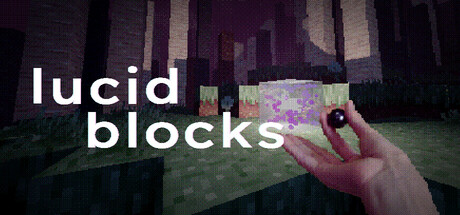

A useful first session connects one exploration goal to a tool, a known crafting use and a small building experiment. The world offers many possibilities, so this guide focuses on readable observations and current update details rather than inventing a universal recipe route or speedrun.
- Choose one destination before expanding the route
- Learn a tool in a controlled context
- Read crafting information before collecting a large stock
- Build a small test before a large mechanism
- Use current stack limits and placement rules
- Watch encounter cues instead of importing old behavior
- Make the menus readable for your session
- Save the result before making a larger change
1. Choose one destination before expanding the route
The store describes plastic cities, grass fields and abandoned warehouses within procedural generation. Start with one area you want to inspect and remember the route back before turning the session into several unrelated excursions. A familiar-looking biome does not prove that its generated contents match another player’s world. This is an exploration method, not a promised map seed or full landmark checklist. Recheck the current surroundings when returning instead of relying entirely on an old image.
Sources: Current Steam listing
2. Learn a tool in a controlled context
Hooks, bee gliders, wands and other equipment have different roles in exploration and encounters. Try one tool where its effect is easy to observe, then keep it equipped long enough to recognize the result. Earlier corrections address lingering hook velocity and incorrect durability loss when switching items while gliding. If an old demonstration depends on those bugs, it is a poor current lesson. This guide does not infer a movement speed, durability cost or exact input sequence from the store overview.
Sources: Current Steam listing / Settings and fixes 2.9.1
3. Read crafting information before collecting a large stock
Apotheosis is presented as an unrestricted crafting system. Use the current item and fusion information to identify what a resource will contribute before collecting heavily. The April update fixes incorrect fusion information for knobs, and Agate changes stacking behavior for previously limited blocks. Keep recipe information and storage capacity separate: carrying more of an item does not itself establish a new recipe. Record the combination that works in your current version rather than inventing a universal crafting tree.
Sources: Current Steam listing / Settings and fixes 2.9.1 / Agate 4.0.0 update
4. Build a small test before a large mechanism
Awa adds robust blocks such as water spillers and drainers, fire emitters and plantable trees. Test a small arrangement and observe its effect before repeating it across a large build. Items and vermin now flow with water, so placement can affect moving objects as well as the appearance of the scene. This is a useful reason to keep the first experiment contained. The release does not provide every construction recipe or a guarantee that a large repeated mechanism has no performance cost.
Sources: Awa 5.0.5 update
5. Use current stack limits and placement rules
Agate moves the formerly five-stack blocks to regular stacking behavior, beginning at fifty and increasing with buds. It also fixes deposits that failed to respect maximum stack size and disallows invalid blocks. Read the current stack and placement result when organizing materials. Avoid using a historical invalid-letter-block trick as a starting requirement. A corrected bug may explain why an old method no longer works without meaning that every normal block of the same appearance has been removed.
Sources: Agate 4.0.0 update
6. Watch encounter cues instead of importing old behavior
Awa adds a warning indicator for Baal lightning and changes several entity animations and movement values. Agate fixes attacks through walls and changes detection ranges for some enemies. These updates matter when deciding how close to approach or where an apparent safe area begins. Read the current cue and the actual effect before repeating an old route. The notes do not supply a universal combat ranking, so this guide does not recommend one weapon as the strongest answer to every entity.
Sources: Awa 5.0.5 update / Agate 4.0.0 update
7. Make the menus readable for your session
The April update separates robust blocks within the divine menu and widens it for scrolling. Awa exposes deft and rigor in the paraphernalia screen and shows equipment sprites on the head in the equipment menu. Use those displays to identify your current setup instead of guessing from a held item alone. Fullscreen, borderless and Arachnophobia options are also documented. Choose the view you can comfortably read, then keep that setting stable while learning the inventory layout.
Sources: Settings and fixes 2.9.1 / Awa 5.0.5 update
8. Save the result before making a larger change
The stability update creates per-save backups and restores them as copies. Keep a known working world before installing a mod or expanding a complex build. Agate introduces automatic detection of a mod initialization script, while Awa warns of later loading incompatibilities; extensions are therefore more than cosmetic assets. Review the mod’s source and current compatibility before adding it. A successful small build is useful evidence for that setup, not a guarantee for every imported extension or generated world.
Sources: Save and stability 3.0.4 update / Agate 4.0.0 update / Awa 5.0.5 update
| First-session goal | Practical observation |
|---|---|
| Explore | One destination and a known return route |
| Craft or build | Current recipe / stack / small mechanism test |
| Keep progress | Working save, backup and version context |
Learn one tool and one block interaction at a time. Preserve a working qualia before a large construction or extension change.
Related guides
Explore deliberately, read current fusion and stack information, and test robust blocks at a small scale. Use current cues and menu tools, then preserve the working result before changing the setup.
Sources checked October 14, 2026. Published facts are linked beside their explanations. Planning and practice suggestions are editorial advice rather than verified optimal builds.
Comment
No comments yet. Be the first to post one.