

1 What makes this different
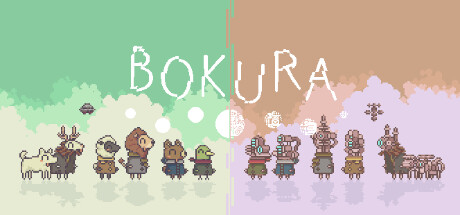
Two boys run away from home and wake up perceiving different realities. Mechanically, that means one player sees a world of animals and the other sees a world of machines, and the two views of the same place do not agree. What looks like an obstacle to one of you may be a path to the other.
The game is built around that gap. You are not solving puzzles in parallel and comparing answers, you are assembling a single accurate picture out of two partial ones, using only what you say to each other. That is why it cannot be played alone and why there is no single-player mode to fall back on.
2 Setting up properly
A few minutes of setup prevents most of the frustration people report in their first hour. The game itself has no built-in voice chat as its communication answer, and the developers explicitly recommend running a voice call app of your choice alongside it.
You each play on your own device. Online co-op and LAN co-op are both supported, and family sharing is listed on the Steam version, so check what applies to your platform before both of you buy.
Text chat technically works and makes the game much worse. Describing a moving scene in writing is slow enough that puzzles stop feeling like puzzles and start feeling like paperwork.
A full playthrough runs about three to four hours. It is designed to be finished in a sitting or two, and stopping in the middle costs you the shared context you had built up.
Say it before you start rather than assuming. The reasoning is in the next section, and it is the single biggest factor in whether the game works for you.
3 Do not show each other your screen
This is the rule that decides whether BOKURA is a memorable experience or a mildly awkward walk. The game is designed around each of you describing what you see, and the moment you share a screen or sit in the same room looking at both displays, the asymmetry that the whole design rests on stops existing.
If one of you is impatient, agree in advance how long you will sit with a hard section before allowing any shortcut. Half an hour is generous for a game this length, and almost every wall gets cleared well before that once you start asking better questions rather than better guesses.
4 Choosing a partner
Skill at puzzle games matters much less here than the ability to explain something clearly and to admit when you have not understood. A pair who talk well will finish comfortably even if neither of them plays many puzzle games, while two very experienced players who talk past each other will struggle.
It also asks for a partner who will actually finish. The story is delivered across the run and there are decisions taken jointly, so a partner who drifts away halfway leaves you with a save you cannot continue alone.
5 Getting unstuck
When a pair stalls in BOKURA, the cause is almost never that the puzzle is too hard. It is that one of you has described something inaccurately and the other has built a plan on top of that description. The fix is to go back to the description, not to try more solutions.
| When you are stuck | Try this instead of guessing |
|---|---|
| Nothing you try works | Both describe the same area again from scratch |
| Your partner sounds confused | Ask what they see rather than repeating yourself |
| You disagree about what is there | Assume you are both right; the worlds differ |
| One of you keeps dying or failing | Swap who leads and who narrates for that section |
6 Choices, and the three endings
The journey includes a number of decisions that shape where it goes, and there are three endings. The intended shape of the experience is that the same pair plays through more than once, since a single run only shows you part of the picture.
Practically, that means you should not agonise over your first set of choices trying to find the correct ones. Decide the way the two of you would actually decide, see where it goes, and treat the later runs as the game showing you what the alternatives looked like. Optimising the first playthrough works against how it is built.
7 What to expect from a session
A first playthrough takes roughly three to four hours, so one long evening or two shorter ones covers it. The game is on Windows and macOS through Steam as well as Switch, iOS and Android, with cross-platform play, which makes it unusually easy to pair up with someone who owns different hardware to you.
Support is broad in other ways too. Controller support is available, and the game ships with a large set of languages covering interface and audio, so a pair who do not share a first language can still each play in their own. That matters more than usual in a game where the entire mechanic is talking to each other.
Exactly two players on separate machines, with a voice call running alongside, and neither of you looking at the other screen. When you disagree about what is in front of you, that is the puzzle rather than a mistake, so go back to describing instead of guessing. A run is three to four hours and there are three endings, so make the choices you would actually make and let later playthroughs show you the rest.
Comment
No comments yet. Be the first to post one.