FAQ / Common questions
BOKURA FAQ
Do we both need to buy it, can three of us play, how long is it, and does it matter which of us sees which world. The practical questions, answered before you spend anything.
1
Before you buy
Q. Can I play this alone?
No. It is a two-player game with no single-player mode at all, and the design depends on two people seeing different things. If you do not have a partner lined up, there is nothing here to play yet.
Q. Can three or four of us play together?
No. It is exactly two, no more and no less. A third person can watch over a shoulder, but they cannot join the run, and having them relay information between you undermines the point of the design.
Q. Do we both need our own copy?
You each need the game running on your own machine, since there is no local co-op or split screen. On Steam the store page lists online co-op, LAN co-op and family sharing, so check what your platform offers before both of you buy separately.
Q. Do we need voice chat?
Effectively yes. The developers recommend running a voice call app of your choice alongside the game. Text works mechanically and slows the pace enough that puzzles stop being enjoyable, because describing a scene in writing takes far longer than saying it.
2
Platforms and crossplay
Q. What can I play it on?
Windows and macOS through Steam, plus Nintendo Switch, iOS and Android. That is an unusually wide spread for a game of this size.
Q. My partner is on a different platform. Does that work?
Yes, cross-platform play is supported. One of you on PC and the other on a phone or a Switch is a normal way to play this, which removes the usual obstacle of getting two people onto the same hardware.
Q. Is there controller support?
Yes, controller support is available. Since you will be talking constantly, some players find a controller more comfortable than keyboard and mouse for a session of this length.
Q. What languages does it support?
A large set, listed as 29 languages with interface and audio support plus subtitles. In a game where the entire mechanic is describing things to each other, that matters more than usual, because two players can each read and hear it in their own language.
3
How it plays
Q. What does the asymmetry actually mean?
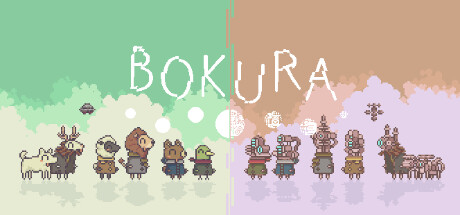
One player sees a world of animals and the other sees a world of machines. You are in the same place, but the two of you are shown different things about it, and neither view is complete on its own. Solving anything means putting the two accounts together out loud.
Q. Does it matter which of us gets which world?
Not in terms of difficulty. Both sides are playable and neither is the support role. What it does affect is your experience of the story, which is one reason the game rewards playing it more than once.
Q. Can we just share our screens to make it easier?
You can, and it removes the game. The design assumes each of you describes what you see, and the community norm is to hide your view and only talk about it. Sharing screens turns a two-perspective puzzle into an ordinary platformer played twice.
Q. Do I need to be good at puzzle games?
Less than you would think. The skill being tested is describing things accurately and admitting when you have not understood something. A pair who communicate well will do fine without much puzzle experience between them.
4
Length, endings and replays
Q. How long is it?
Roughly three to four hours for a playthrough. That fits one long evening, and finishing in a sitting or two is better than spreading it out, because you lose the shared context you had built up between sessions.
Q. How many endings are there?
Three. The journey includes a number of decisions that shape where it goes, and the intended shape of the experience is that the same pair plays through more than once to see the whole picture.
Q. Should we try to get the best ending first time?
No, and trying works against the design. Make the choices the two of you would actually make, see where they lead, and treat the later runs as the game showing you the alternatives. Optimising a first playthrough of a three-ending story mostly removes the reason to replay it.
Q. Should we swap sides on a second run?
It is worth doing. Seeing the other world changes what you noticed the first time, and since the two of you already share a vocabulary for the places, a second run moves considerably faster than the first.
5
Getting stuck
Q. We have been stuck for ages. What do we do?
Go back to describing rather than trying more solutions. Almost every stall comes from one of you having described something loosely and the other planning around that description. Have both of you describe the same area again, slowly, from scratch.
Q. We disagree about what is in front of us. Who is wrong?
Probably neither of you. The two worlds genuinely differ, so a contradiction is usually the puzzle rather than an error. Describe the edges of the disagreement instead of picking a winner, because that is where the two versions have to line up.
Q. Is it fine to look up a walkthrough?
For a game whose entire content is working it out together, a walkthrough removes most of what you paid for. Agree in advance how long you will sit with a hard section before allowing one. Half an hour is generous for a three to four hour game.
6
About the game itself
Q. Who made it?
Developed by tokoronyori and published by Kodansha. It launched on 9 August 2023, following an Early Access period that began in February of the same year.
Q. How is it received?
Very well. On Steam it sits at roughly 95 percent positive across around 4,800 reviews, which is high even for a well-liked indie title.
Q. What is it actually about?
Two boys run away from home, and after an incident they wake up perceiving different realities. Beyond that the story is best met without preparation, since the decisions you make together are the substance of it.
Summary
Exactly two players on separate machines with a voice call running, and cross-platform play means your partner can be on PC, Switch or a phone. A playthrough is three to four hours with three endings, so make honest choices rather than optimising, and swap sides on a second run. When you get stuck, go back to describing instead of guessing, and never share screens.


Comment
No comments yet. Be the first to post one.