

1 Why description is the mechanic
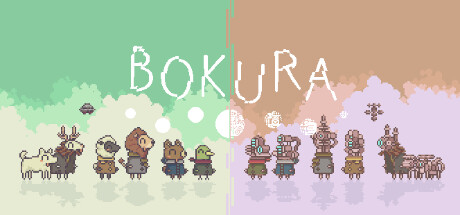
One of you sees a world of animals and the other sees a world of machines. The two views describe the same place, but they do not show the same things, and neither of you can look at the other display. Every solution therefore has to travel through a sentence one of you says out loud.
That makes description a skill the game is actually testing, in the same way another game tests aim or timing. A pair who describe accurately clear sections quickly. A pair who describe loosely spend twenty minutes acting on a picture that was never correct in the first place.
2 Agree a vocabulary early
In the first ten minutes, settle how you will refer to positions. It sounds fussy and it saves an enormous amount of confusion later, because the alternative is two people using left and right to mean different things depending on which way their character happens to be facing.
| Instead of | Say |
|---|---|
| On the left | Screen left, or towards where we came from |
| Up there | Two levels above the ledge you are on |
| Near the thing | Just past the tall object we named the tower |
| A bit further | About the width of the gap you just crossed |
Naming landmarks is the highest value habit of the lot. As soon as either of you sees something distinctive, give it a short name and use that name for the rest of the session. Once the two of you share four or five names for places, whole exchanges collapse from thirty seconds to five.
3 Describe what is there, not what it means
The most common failure is interpreting instead of reporting. If you say there is a switch, you have already decided the object is a switch, and your partner now plans around a switch. If you say there is a small red object on a post at about head height, they can work out for themselves whether that matches anything on their side.
The right-hand column takes slightly longer to say and it removes a whole category of dead ends. Your partner is the one who can tell whether the thing you described is significant, because they are the one holding the other half of the picture.
4 Confirm before acting
Before either of you does something that cannot be taken back, say what you are about to do and wait for a yes. It costs two seconds. Acting on an assumption and finding out afterwards that your partner meant something else is the most reliable way to lose progress in this game.
I am going to walk forward past the tower, about three steps.
Not a noise of agreement, an actual yes or a stop. Ambiguity here is what causes the accidents.
Say what actually occurred, especially if it was not what either of you expected. That correction is the most valuable sentence in the exchange.
5 When you disagree
You will reach moments where one of you is certain there is something in a place the other is equally certain is empty. The instinct is to work out who is mistaken. Usually neither of you is. The worlds genuinely differ, and the contradiction is the information the puzzle is handing you.
The productive response is to describe the disagreement more precisely rather than to resolve it. If one of you sees a solid wall and the other sees open ground, the interesting question is what exactly each of you sees at the edges of that area, because that is where the two versions have to connect.
6 Taking turns leading
Most pairs settle into one person directing and the other following, usually without noticing it happened. That is fine for a while and it becomes a problem when the section ahead is one the quiet player can see better. Swapping who leads is a cheap fix that pairs rarely think of.
7 A checklist for a stuck moment
When nothing is working, run through these in order before considering any outside help. Most walls fall at step two or three.
| Step | What to do |
|---|---|
| 1 | Both describe the current screen from scratch, slowly |
| 2 | Check whether either description contained an interpretation |
| 3 | List the things you disagree about and describe their edges |
| 4 | Swap leader and narrator, then try the section again |
| 5 | Retrace to the last point you both understood and come forward |
Step five is underused. Going back to ground you both understand and walking forward again while describing rebuilds the shared picture, and a surprising number of stuck moments turn out to be a wrong assumption made two screens earlier.
Name landmarks in the first ten minutes and use those names for the rest of the run, and agree how you will express directions so that left means the same thing to both of you. Report what you see rather than what you think it is, because your partner holds the half of the picture that decides what matters. When you disagree, describe the edges of the disagreement instead of deciding who is wrong.
Comment
No comments yet. Be the first to post one.